
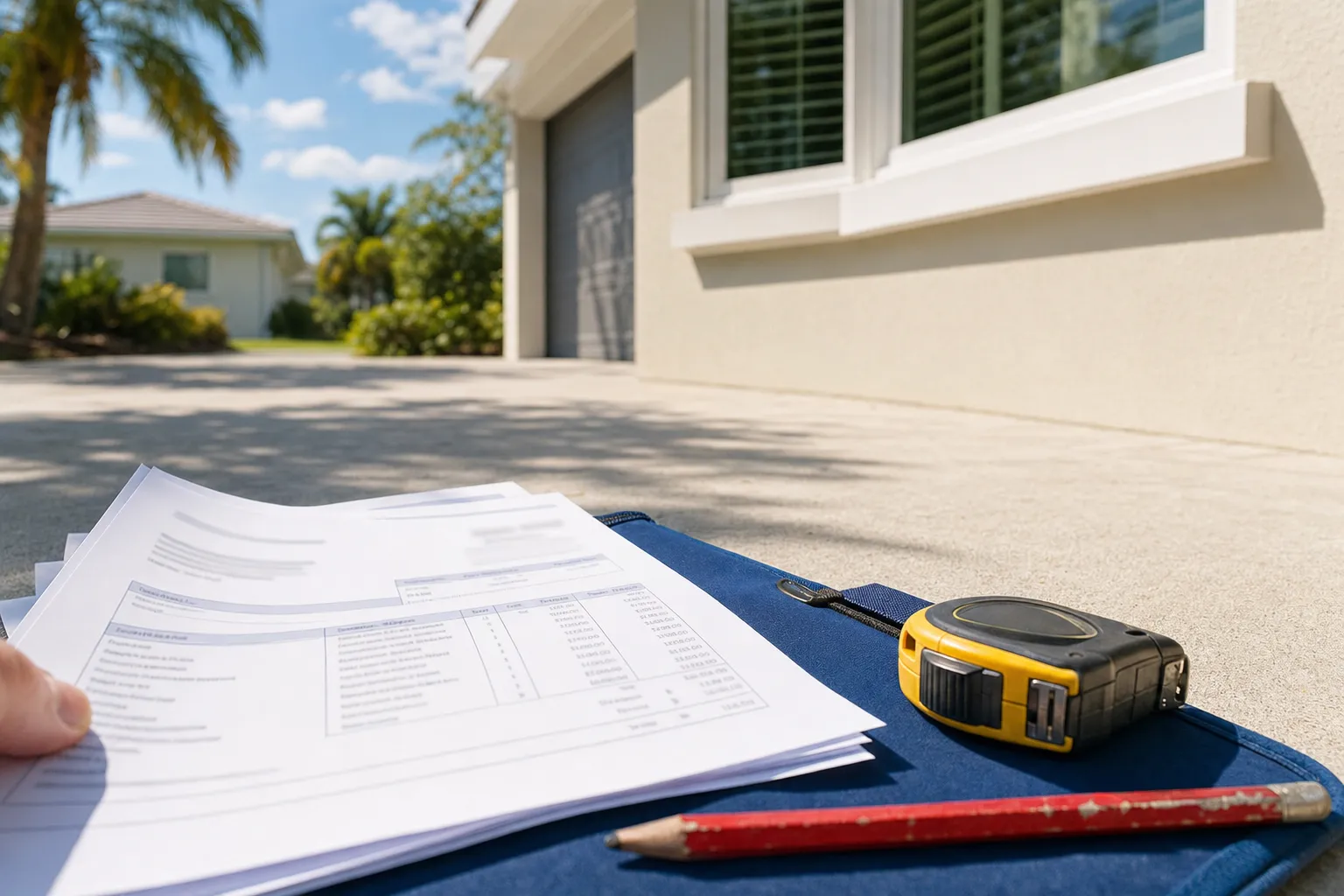
Get at least one detailed contractor estimate before you open an insurance claim dispute. A clear estimate that lists scope, materials, labor and photos helps translate property damage into repair cost, which insurers rely on when valuing a claim in Desoto Lakes Florida.
Why contractor estimates matter in an insurance claim dispute
Contractor estimates are the practical blueprint of what needs to be repaired. Insurers review estimates to decide whether the scope and cost match policy coverage. With more than 30 years as an insurance adjuster, Tom brings a working knowledge of what insurers look for and what often causes disagreements.
Well prepared estimates do three things for a policyholder. They document damage, show reasonable repair methods and provide a professional price that supports negotiations or an appraisal. When an insurer disputes scope or cost, a competent estimate can be the most persuasive evidence in your file.
- Shows detailed scope of work, not just a single line item total.
- Connects visible damage to specific repairs and materials.
- Makes it easier to compare the insurer estimate to contractor pricing.
What a dependable contractor estimate should include
Essential elements we look for
A useful estimate is more than a number. It breaks the job into parts and ties each part to photos and measurements.
- Line item scope, with quantities and unit pricing for materials and labor.
- Material specifications, including brand, model or grade when relevant.
- Clear measurements and diagrams for roofs, siding, drywall or deck work.
- Photos that show the damaged area and the same view with the contractor pointing out the problem.
- Notes on access, demolition, and any required permits or code upgrades.
- Expected timeline and any assumptions that change price, like hidden damage.
Estimate formats and supporting documents
Good estimates come in a few formats. Some contractors use industry estimating software, others provide itemized proposals on company letterhead. We do not prefer one format over another. What matters is transparency and enough detail to match the insurer s adjuster line for line.
How we use contractor estimates during a dispute
- Initial review. We compare the contractor estimate to the insurer s scope. We mark agreed items, disputed items and items that need clarification.
- Document gaps. If the insurer omitted reasonable repairs or limited materials, we document why those items are required using photos, manufacturer guidance and code references when needed.
- Get independent input. For complex damage we may obtain an independent specialist report, such as a structural engineer or roofing consultant, to support the contractor s approach.
- Present a consolidated position. We send a clear cover letter to the insurer that ties each disputed item to the supporting estimate line, photos and any expert findings.
- Negotiate and escalate. If the carrier will not move, we evaluate appraisal, arbitration or litigation options and prepare the file for that next stage.
Throughout, we avoid surprises. We explain what items are likely to be controversial and what the insurer typically accepts in Sarasota area claims.
Checklist to prepare a contractor estimate for a dispute
- Ask the contractor to itemize labor, materials and quantities.
- Collect dated photos of all damaged areas from multiple angles.
- Keep original invoices or proof of recent upgrades if they affect valuation.
- Note weather events, police reports or any official event that created the damage.
- Save the contractor s contact information and business license details.
Pro tip: Ask your contractor to explain any assumptions in writing, for example whether they included roof deck replacement, underlayment types or permit costs. That prevents confusion when the insurer compares estimates.
Common red flags in contractor estimates and how they affect disputes
Not every estimate will withstand insurer scrutiny. Here are issues we see often, and why they matter.
- Vague descriptions, like general cleanup or patch work without measurements. Insurers deny or lowball vague items.
- Missing photos or measurements. Without photos, it is harder to prove the repair matches the reported damage.
- No mention of permits or code upgrades. Local code requirements can increase cost, and insurers sometimes resist paying code upgrades unless specifically shown.
- Unclear material specs. If the contractor lists "like kind" without a brand or grade, the insurer may assume a lower cost.
Watch out: Estimates written as a single lump sum without line items make disputes longer and more expensive. Ask for breakdowns even if the total is the same.
How much documentation is enough
There is no exact page count, but more quality documentation speeds resolution. We look for estimates that can be cross referenced to photos, invoices, manufacturer recommendations and, when needed, expert reports.
For hurricane, roof or major structural damage in Desoto Lakes Florida, we typically expect:
- At least one fully itemized contractor estimate.
- Time stamped photos of damage and surrounding areas.
- Any prior repair invoices for the same systems, if relevant.
- Manufacturer specifications when material performance matters, for example roofing membranes or windows.
When to get a second estimate or an expert report
Get a second opinion when the insurer s position is far below reasonable market pricing or when the scope of repairs is disputed. For technical issues, such as structural framing or complex roof systems, an engineer or certified inspector can provide a neutral assessment.
We often recommend a second estimate when repairs involve multiple trades, or when the insurer pays for temporary repairs but disputes permanent work. A second estimate clarifies market range and highlights unusually low or high pricing.
What good looks like from an insurer s perspective
Insurers expect estimates that are measurable, repeatable and justified. They want to be able to check a line, see the photo or spec that supports it, and understand the need for each item.
Tom s background as an adjuster helps us present estimates in a format insurers recognize. That background does not change what the contractor must provide, but it does let us identify which items will be accepted and which will face pushback.
Practical steps you can take before filing a dispute
Follow these steps to reduce delay and strengthen your position.
- Gather photos now. Take multiple photos of each damaged area before any permanent repairs.
- Get at least one clear contractor estimate. Ask for an itemized proposal with photos attached.
- Keep communications in writing. Email or text contractor estimates and insurer correspondence so there is a record.
- Preserve temporary repairs evidence. If you make emergency repairs, keep receipts and take photos showing work done.
How our approach differs from simply exchanging estimates
We do more than collect numbers. We analyze estimates against policy language, identify gaps in coverage, and prepare the documentation needed for appraisal or litigation if necessary. We also know common insurer tactics and how to respond without escalating unnecessarily.
When a dispute involves diminished value, diminished marketability or complex causation questions, we coordinate with appraisers and experts to quantify losses beyond repair costs.
Frequently asked questions
Do I need more than one contractor estimate before disputing an insurer s offer?
Not always, but a second estimate helps when there is a wide pricing gap or when scope is disputed. A single, detailed itemized estimate with strong photos can be sufficient if it is clearly documented. When the issue is technical or involves significant sums, we commonly obtain a second estimate or an expert report.
Can I use an estimate from a contractor who will also do the work?
Yes. Insurers accept contractor estimates from the party who will perform repairs. The important factor is transparency. The estimate should be itemized and supported with photos and specifications so the insurer can evaluate each item.
How do contractor estimates affect appraisal or arbitration?
Estimates form the basis for the scope and cost arguments in appraisal or arbitration. During appraisal, each side may present estimates and an appraiser compares scope and price. For arbitration or litigation, a well documented estimate supports damages and can shorten the dispute.
What if the insurer offers to pay only a portion of the estimate?
Partial payments are common. We document the omitted items, explain why they are reasonable, and attempt to resolve them through negotiation or appraisal. If a carrier denies necessary repairs with no reasonable basis, other dispute processes may be appropriate.
Should contractor estimates include permit and code upgrade costs?
Yes. If a repair requires a permit or a code based upgrade, the estimate should state that and provide estimated costs. Lack of permit line items often leads to disputes about whether the insurer owes those expenses.
Where can I read more about collecting strong claim documentation?
Our topic on claim documentation covers photographs, estimates and record keeping in greater detail. For questions about the dispute process, see our Insurance Claim Disputes page. If you are in the Sarasota area, our location page offers local context and resources at Sarasota Florida.
Key takeaway
Before you start an insurance claim dispute in Desoto Lakes Florida, secure a clear, itemized contractor estimate with photos and supporting documentation. A detailed estimate turns damage into measurable repairs and is often the most effective tool for resolving scope and cost disagreements.
Learn more and check our local profile
For neighborhood specific guidance, see our Insurance Claim Disputes page and the claim documentation resources linked above. Read client reviews and find directions on our Sarasota profile.