
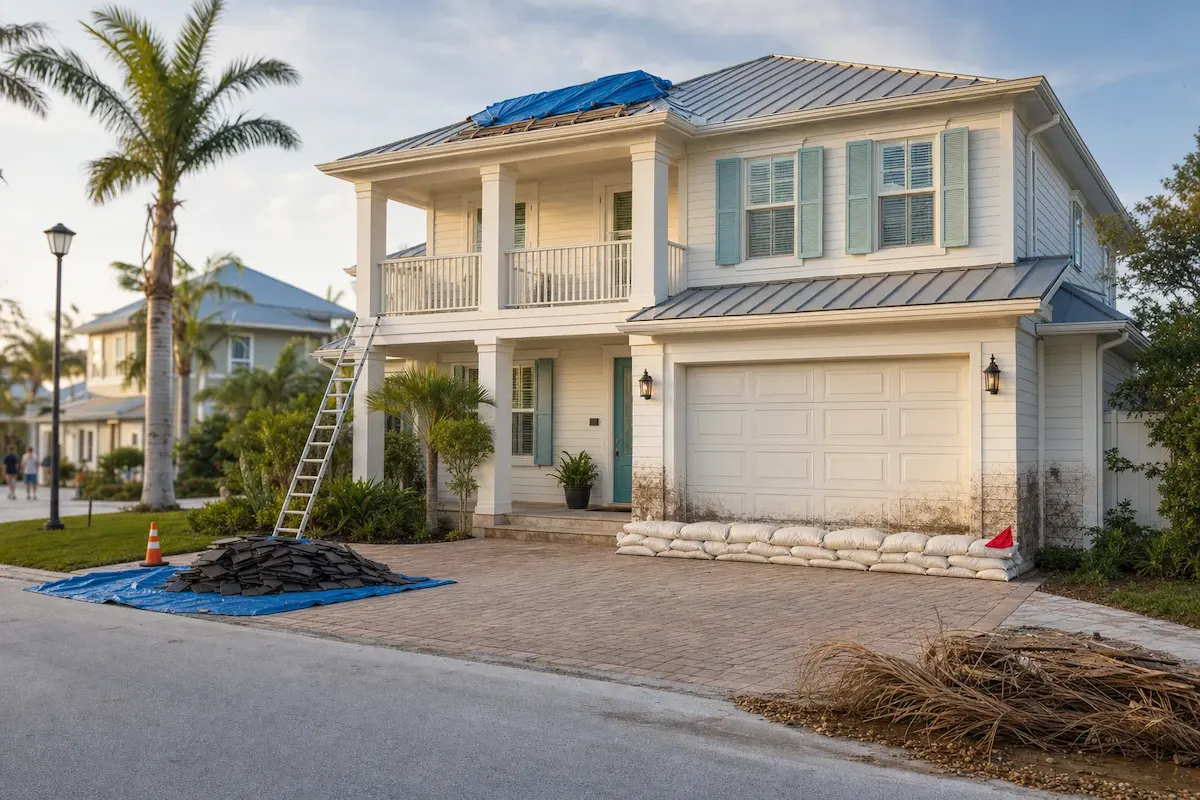
Short answer: timelines and costs usually depend on whether an insurer treats the loss as wind or as flood, because those two labels use different policies, different adjusters and different valuation rules. In Sarasota Springs Florida, wind claims commonly move under a homeowner or windstorm policy and often see a faster initial response, while flood claims typically go to a separate flood program and can require extra proof, different adjusters and more steps to resolve.
Why classification as flood or wind matters
Insurance companies base coverage and valuation on the source of loss. A broken roof from a hurricane driven gust is often evaluated as wind damage under a homeowner or windstorm policy. Water that rises from a storm surge or overflowing river is usually considered flood and is handled under a flood policy such as the National Flood Insurance Program or a private flood policy. That distinction matters because the scope of coverages, deductibles, exclusions and the people who inspect and value the loss can all change when the cause changes.
Because flood and wind are handled under different systems, a dispute over classification can create extra steps. An insurer may accept part of a loss as wind but deny other items as flood related, or vice versa. Those mixed evaluations are a common source of disagreement for homeowners, HOAs and property managers in Sarasota Springs.
For background on how claims work in general, see the Wikipedia entry on insurance claims for an overview of the claim process and terminology. For guidance on flood insurance specifically, FEMA outlines how flood insurance differs from property insurance and what it covers.
Typical timelines you can expect
There is no single timeline, but disputes tend to follow a pattern. Early action, clear documentation and quick inspection usually shorten the process. Common phases and how long they often take are:
- Initial notice and inspection. You should report the loss promptly. An adjuster inspection usually happens within days to a few weeks when access and safety permit.
- Initial coverage decision or estimate. After inspection, the insurer issues a scope of loss and a payment or a denial on specific items. That review often takes a few weeks, but complex losses or storms that strain adjuster resources can take longer.
- Supplemental inspections and disputes. If you dispute the scope or classification, additional inspections, engineer reports or contractor estimates can add weeks to months.
- Appraisal, arbitration or litigation. When appraisal or arbitration clauses apply, formal processes add more time. Appraisals and arbitration can take several months. If court becomes necessary, expect a longer timeline measured in many months to years depending on the case and the court calendar.
Several factors commonly lengthen a dispute:
- Mixed cause losses where wind and flood both contributed.
- Delayed access for adjusters after a large storm.
- Insufficient documentation that requires experts or testing.
- Policy provisions such as demolition, ordinance and law, or separate deductibles for wind or flood.
Common cost drivers and who usually pays
Costs in a dispute reflect the underlying damage, the policy language and the valuation method. Important cost drivers include:
- Scope of covered damage. Structural damage, contents loss and consequential losses such as mold remediation are valued differently under different policies.
- Replacement cost versus actual cash value. Some policies pay replacement cost, others pay actual cash value which includes depreciation.
- Mandatory code upgrades and building code compliance. Local building code requirements after a loss can add cost and require specific documentation.
- Mitigation and emergency repairs. Reasonable steps to prevent further damage are typically covered, but the insurer may request receipts and proof.
- Expert reports. Engineers, certified public adjusters and specialized contractors add to upfront costs but can help establish cause and value.
When a claim crosses the line between wind and flood, payment responsibility can change. Flood policies usually exclude wind, and homeowner policies often exclude flood, so a classification that shifts even a portion of loss between those policies can change which carrier or program pays which portion of the claim.
How we approach classification disputes and timelines
We draw on more than 30 years of insurance claim adjusting experience to evaluate how insurers classify damage, and to identify the evidence that matters. When you bring a dispute to us we do three things early:
- Clarify coverages. We review your homeowners policy, any flood policy and the insurer correspondence to see which provisions apply, and we identify any deadlines or appraisal clauses that matter.
- Secure critical evidence. We assemble the inspection reports, contractor estimates, photos, mitigation receipts and any expert opinions needed to show cause and sequence of damage. See our guidance on evidence gathering for more on what helps a claim.
- Map realistic timelines. We set expectations for what the insurer should do next and the time those steps normally require, and we note when a formal appraisal, arbitration or court action is likely.
When classification is the central dispute, we focus on technical evidence such as waterline marks, roof failure patterns, drainage records and meteorological data. Those items often determine whether an item is characterized as wind caused or flood caused. If an appraisal clause applies, we prepare the appraisal paperwork and name an appraiser who can evaluate cause and value. For topics on formal valuation, see our page explaining the appraisal process.
Note: statutes of limitation and contractual notice requirements affect how long you have to bring a claim or a dispute. For an explanation of statute limitations in Florida claims, see our topic on statute limitations.
Practical steps for homeowners in Sarasota Springs after wind or flood damage
- Report the claim promptly. Timely notice preserves rights and speeds inspection scheduling.
- Document everything. Take dated photos and videos, keep contractor and repair estimates, and save receipts for mitigation work.
- Separate likely flood damage from wind damage. Record visible water lines, and note whether water rose from outside or entered through a breached roof or window. That differentiation helps clarify the likely policy response.
- Keep temporary repairs reasonable and documented. Insurers commonly reimburse reasonable mitigation, but you must keep receipts and photos.
- Preserve records and communications. Save emails, adjuster reports, scopes of loss and any denials or reservation of rights letters.
Watch out: Allowing extensive demolition without documenting the condition first can weaken an argument about cause. Photograph damage before you remove or discard materials when it is safe to do so.
When appraisal, arbitration or litigation becomes part of the timeline
Many property policies contain appraisal clauses that require a neutral process to resolve valuation disputes. Appraisal focuses on how much loss is worth, while appraisal may also touch on cause when the two sides disagree about whether an item is covered. Arbitration and litigation resolve coverage and denial disputes where appraisal is not available or has been exhausted.
Expect appraisal to add weeks to months depending on how quickly neutral appraisers and umpire are selected and how much evidence they require. Arbitration and court litigation add more time and procedural steps. We review your policy language early to determine whether appraisal is mandatory, optional or inapplicable, and we plan accordingly. For more on appraisal and arbitration, see our article on the appraisal process.
Cost control strategies and realistic expectations
Disputes do not always require expensive experts. We evaluate whether a contractor estimate, aerial photos, municipal flood maps or an adjuster reinspection will likely move the claim. When specialized reports are necessary, we explain the expected costs and the likely impact on value and timeline. Our goal is to balance cost, time and the odds of recovery so you can make an informed choice.
Checklist: documents and evidence that often matter
- Photographs and video of the damage with dates.
- Contractor estimates and repair invoices.
- Adjuster reports and insurer correspondence.
- Receipts for mitigation and emergency repairs.
- Meter readings, maintenance logs, and any building management records for HOAs or properties with shared systems.
Local considerations for Sarasota Springs Florida
Sarasota Springs homeowners and property managers face local considerations such as proximity to tidal waters, local drainage characteristics and municipal building code requirements after storms. Hurricane related claims may combine wind damage and flood or surge effects, which is why local meteorological and municipal records can be important evidence. For claims involving hurricane or storm damage, our hurricane damage claims service may be relevant, and we work with local experts familiar with Sarasota area building practices and codes.
We commonly coordinate with local contractors and engineers who understand construction practices in Sarasota and can document both cause and the repairs necessary to return a property to a safe condition.
Key takeaway
Whether a loss is labeled wind or flood shapes who pays, how value is calculated and how long a dispute takes to resolve. Early documentation, a careful review of policy language and targeted evidence are the most effective ways to shorten timelines and control costs in Sarasota Springs disputes.
Frequently asked questions
Can flood damage ever be covered by my homeowner policy?
Generally, standard homeowner policies exclude flood caused by rising water, and flood losses are handled under separate flood insurance. However, damage that is caused by wind and only secondarily by water may be evaluated differently. Each claim turns on the policy language and the facts. We review policies to identify which provisions apply and what evidence will be persuasive.
How long does an appraisal take when there is a dispute about cause or value?
Appraisal timelines vary. Selection of appraisers and an umpire, scheduling inspections and exchanging reports all take time. Expect appraisal to add weeks to months depending on how much analysis the appraisers require and how quickly the parties nominate their appraisers.
What should I do if my insurer says the loss is flood when I think wind caused it?
Start by documenting the condition with photos and contractor notes, preserve any physical evidence you can safely keep, and collect weather and municipal records that show the sequence of events. We also recommend reviewing the insurer report and the policy language. If the classification shifts a significant portion of recoverable value, a formal dispute involving appraisal, additional experts or legal representation may be necessary.
Do flood and wind disputes have different deductibles?
Yes. Deductibles can differ by policy and by peril. A homeowner policy may have a separate windstorm deductible, and a flood policy typically has its own deductible. The exact amounts and how they apply are determined by your policies and any declarations pages.
Where to find more information
For more on how we handle insurance claim disputes, see our Insurance Claim Disputes service page. For details about policy interpretation and coverage questions, visit our Policy Interpretation topic page. If you are in the area, our Sarasota office location page has local information and links to other resources.