
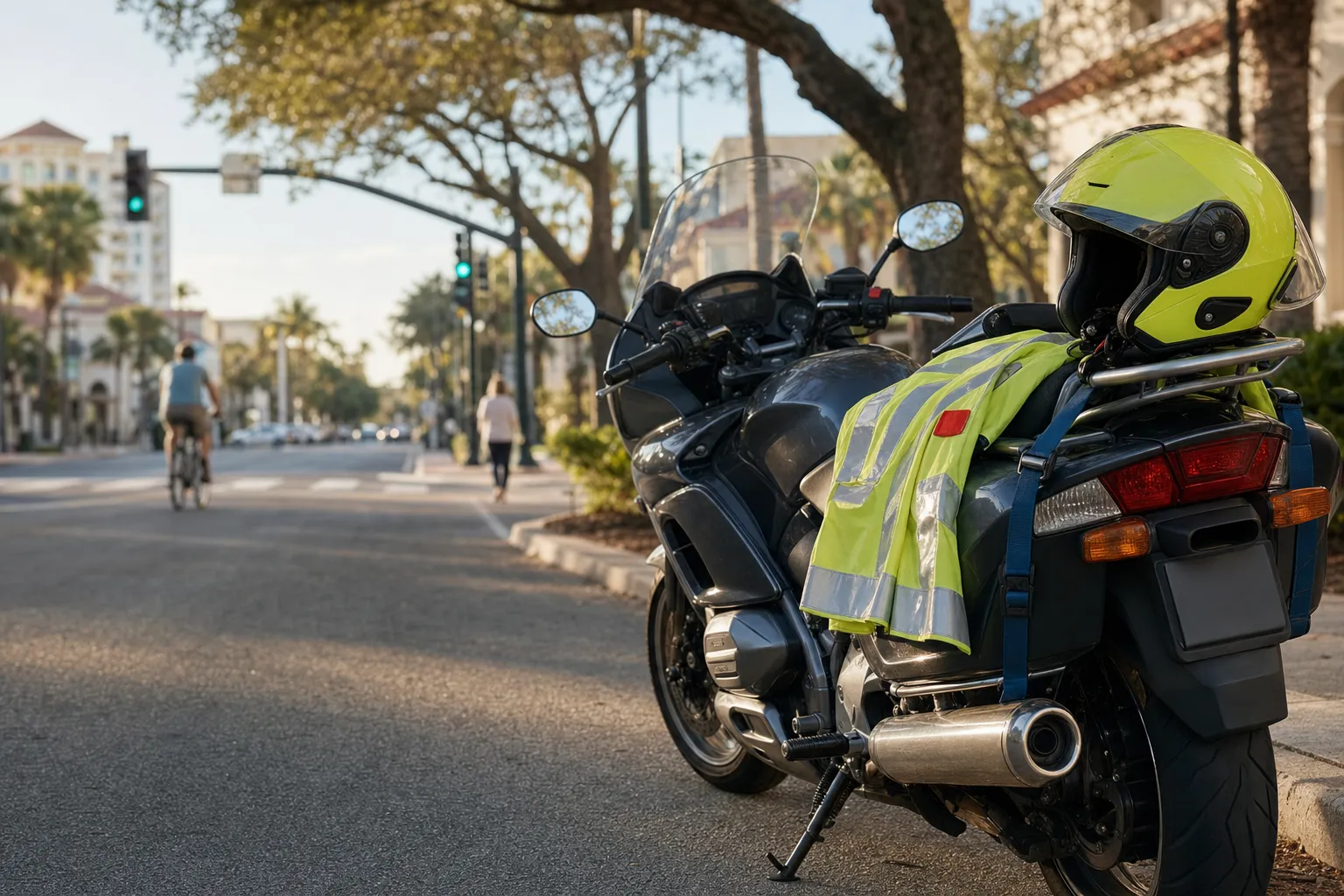
Motorcycle visibility matters because it often determines who an insurer or judge finds at fault, how much compensation a rider can recover, and whether diminished value or coverage disputes follow. In Siesta Beach, Florida, where coastal light and tourist traffic create unique sight line issues, visibility can be the difference between a resolved claim and a contested insurance dispute.
What we mean by motorcycle visibility
When we say motorcycle visibility we mean how easily a rider could be seen by other road users before a collision. Visibility includes factors you might expect, such as lighting, clothing and reflectors, and also environmental and situational elements, such as sun glare at the Gulf, roadside landscaping, parking patterns near beach access points, and the behavior of other drivers.
Direct answer you can quote: Motorcycle visibility affects fault and damages in insurance claim disputes because poor visibility can be used by the other party to argue comparative negligence, while clear documentation that a rider was visible strengthens a claim for liability, diminished value, and full recovery.
Why motorcycle visibility matters in Siesta Beach insurance disputes
Visibility plays two roles in a claim. First, it is relevant to fault. If a driver claims they did not see a motorcycle, insurers will evaluate whether that claim is credible. Second, visibility affects damages and diminished value. If visibility contributed to an avoidable collision, liability may shift, and settlement value changes.
Locally, Siesta Beach brings specific visibility challenges. The beach attracts pedestrians and parked vehicles near shore access, directions of travel shift during tourist seasons, and morning or late afternoon sun can create temporary blinding glare along Ocean Boulevard and side streets. We take those local patterns into account when we evaluate causes and when we gather evidence for an insurance dispute.
Key concepts to understand
- Line of sight. The unobstructed view a driver has of the motorcycle before impact.
- Conspicuity. How attention grabbing the motorcycle is, based on headlights, clothing, reflectors and movement.
- Comparative negligence. Florida applies comparative fault rules that can reduce recovery if a rider is partly at fault.
- Diminished value. The difference between a vehicles market value before and after an accident even after repairs.
- Evidence chain. Timely photos, witness statements, scene measurements, and expert reports that document visibility conditions.
How visibility affects liability and comparative negligence
In Florida, comparative negligence can reduce a riders recovery by the percentage of fault assigned to them. Visibility is central to that determination. If a driver says "I never saw the motorcycle," an insurer may argue that the rider was wearing dark clothing or lacked reflectors. Conversely, if we can show the motorcycle had bright gear, functioning headlights, and an unobstructed line of sight, that undermines the drivers version of events.
We analyze visibility alongside other liability factors such as road markings, traffic control devices, speed, and whether the driver violated a right of way. For technical questions about how fault percentages are assigned, we rely on liability analysis and accident reconstruction experts. See our topic on liability analysis for more about that process.
Evidence that proves or disproves visibility claims
Not all evidence is equally persuasive. Collecting the right types of proof early makes a major difference in a disputed insurance claim.
| Type of evidence | What it shows | Strength for a dispute |
|---|---|---|
| Photographs from the scene | Lighting, angles, parked cars, signage, skid marks | High when time stamped and comprehensive |
| Video, including traffic or security cameras | Movement, timing, exact positions | Very high, often decisive |
| Independent witness statements | Third party observations of visibility and actions | Moderate to high, depends on consistency |
| Accident reconstruction reports | Expert analysis of sight lines and timing | High, persuasive to insurers and courts |
| Vehicle inspections and lighting checks | Whether headlights, reflectors, or signals worked | High when documented by professionals |
We frequently coordinate with reconstruction experts to recreate sight lines and to test whether sun glare, an obstruction or other factors made the motorcycle effectively invisible to the driver involved.
What good documentation looks like in a visibility dispute
We cannot do the physical evidence collection for every client at the scene, but we can tell you what strengthens a claim and what our team will gather and preserve once we are involved. For riders, that means preserving photos, notes, and any video immediately after a collision. For our work, that means securing camera footage, obtaining scene diagrams, and arranging expert inspection when warranted.
Visibility documentation checklist
- Time stamped photos of the entire scene from multiple angles, including road signs and parking patterns
- Video footage or surveillance requests from nearby businesses or traffic cameras
- Witness names and contact details, with a short note about what they saw
- Inspection report of motorcycle lighting and rider conspicuity items
- Weather and sun angle notes, including time of day
Pro tip: If you can do so safely, photograph the scene immediately after the collision on your phone. Even low quality images taken right away are often more valuable than high quality photos taken days later.
Common defenses insurers use about visibility
Insurers often raise visibility as a defense. Typical arguments include that the rider was wearing dark clothing, that the motorcycle was in a driver blind spot, or that the rider failed to use a headlight. Those points can shift fault unless we counter them with strong documentation, maintenance records, witness testimony, or expert opinion.
Watch out: Insurers sometimes rely on post repair photos that no longer show original damage or on statements taken without representation. Early preservation of evidence is critical to avoid those issues.
How visibility links to diminished value and other damages
Visibility contributes indirectly to damages beyond bodily injury. For example, if poor visibility is argued to increase a riders fault, that can reduce recovery for pain and suffering, lost earnings, and diminished value. Diminished value claims hinge on the idea that a motorcycle worth more before a crash is worth less after repairs, and clear liability makes it easier to recover that loss from the at fault partys insurer.
We regularly handle diminished value matters as part of motorcycle accident claims. For an overview of that process, see our service page on Diminished Value.
How we approach visibility issues in an insurance claim dispute
We combine our experience as former insurance claim adjusters with more than 30 years of insurance claim handling to evaluate visibility issues from both sides of a claim. Our typical approach includes these steps.
- Early evidence preservation. We request surveillance video, secure witness statements, and have the scene photographed or measured when possible.
- Technical review. We review lighting, reflectors, and headlamp function and obtain expert inspection if functionality is disputed.
- Accident reconstruction. When necessary, we retain a reconstruction expert to model sight lines, time to perception, and stopping distances.
- Liability analysis. We put visibility into the wider context of traffic rules, signage, and driver conduct, and prepare arguments that counter claims based on poor visibility.
- Negotiation and documentation. We package the evidence for insurers or a court to show why our client should not bear the reduction in recovery insurers seek to apply.
For more on how we handle the broader claim process, see our Insurance Claim Disputes service page at Insurance Claim Disputes.
Related services and topics we work with
Visibility issues often intersect with other claim topics we handle: motorcycle accident claims, diminished value, liability analysis, and evidence gathering. You can read more about our approach to motorcycle crashes on our Motorcycle Accident Claims page, and about gathering and preserving proof on our topic page about Evidence Gathering.
Related locations and local patterns
We handle cases throughout Sarasota County and frequently see visibility patterns that matter in Siesta Beach, including glare from low sun along the shore, crowded parking near beach access points, and tourists unfamiliar with local traffic rules. Learn more about this office location on our Siesta Beach page at Siesta Beach, Florida.
Helpful external resources
For context on motorcycle safety trends and visibility research, reputable sources include the National Highway Traffic Safety Administration and the Florida Highway Safety and Motor Vehicles division. These organizations publish crash data and guidance that can help explain broader risk factors that affect visibility and claims.
Common questions about visibility and insurance disputes
Below we answer the questions we hear most often from riders and family members about how visibility affects insurance claim outcomes.
Frequently asked questions
Can poor visibility make me partly at fault in Florida?
Yes. Florida uses comparative negligence, so if poor visibility or rider behavior contributed to the crash, an insurer or court may assign a percentage of fault to the rider that reduces recovery. We analyze the full facts to show when visibility was not reasonably avoidable or when the other driver bears primary responsibility.
What pieces of evidence most strongly refute a claim I was not visible?
Time stamped photos showing lighting and sight lines, traffic or security camera video, consistent independent witness statements, and expert reconstruction reports are among the most persuasive items in refuting a visibility defense.
Does wearing reflective gear eliminate visibility disputes?
No. Reflective gear helps conspicuity, but it does not by itself resolve every dispute. Visibility is context dependent, and we consider gear alongside lighting, road layout, driver conduct and local conditions when building a case.
How does visibility affect diminished value claims?
Visibility can affect liability determinations, and liability affects who pays diminished value. If the other driver is found at fault, the rider is more likely to recover diminished value. If the rider bears partial fault due to visibility, that recovery can be reduced.
When should I involve an attorney after a motorcycle collision with disputed visibility?
Involving counsel early can help preserve evidence, secure camera footage, and avoid statements taken without representation. We often step in when insurers dispute fault based on visibility or when diminished value and injury damages are significant. Our background in insurance adjusting is focused on those disputes.
Key takeaway
Visibility is not just a rider safety issue, it is central to liability and damage calculations in insurance claim disputes. Early evidence preservation, expert analysis, and a focus on local conditions in Siesta Beach give the strongest chance of countering visibility based defenses and protecting recovery for injuries and diminished value.
Learn more and check our local profile
Read our Google Business Profile to see client reviews and get directions, and explore related pages to learn how we handle visibility, liability, and diminished value in motorcycle claims.