
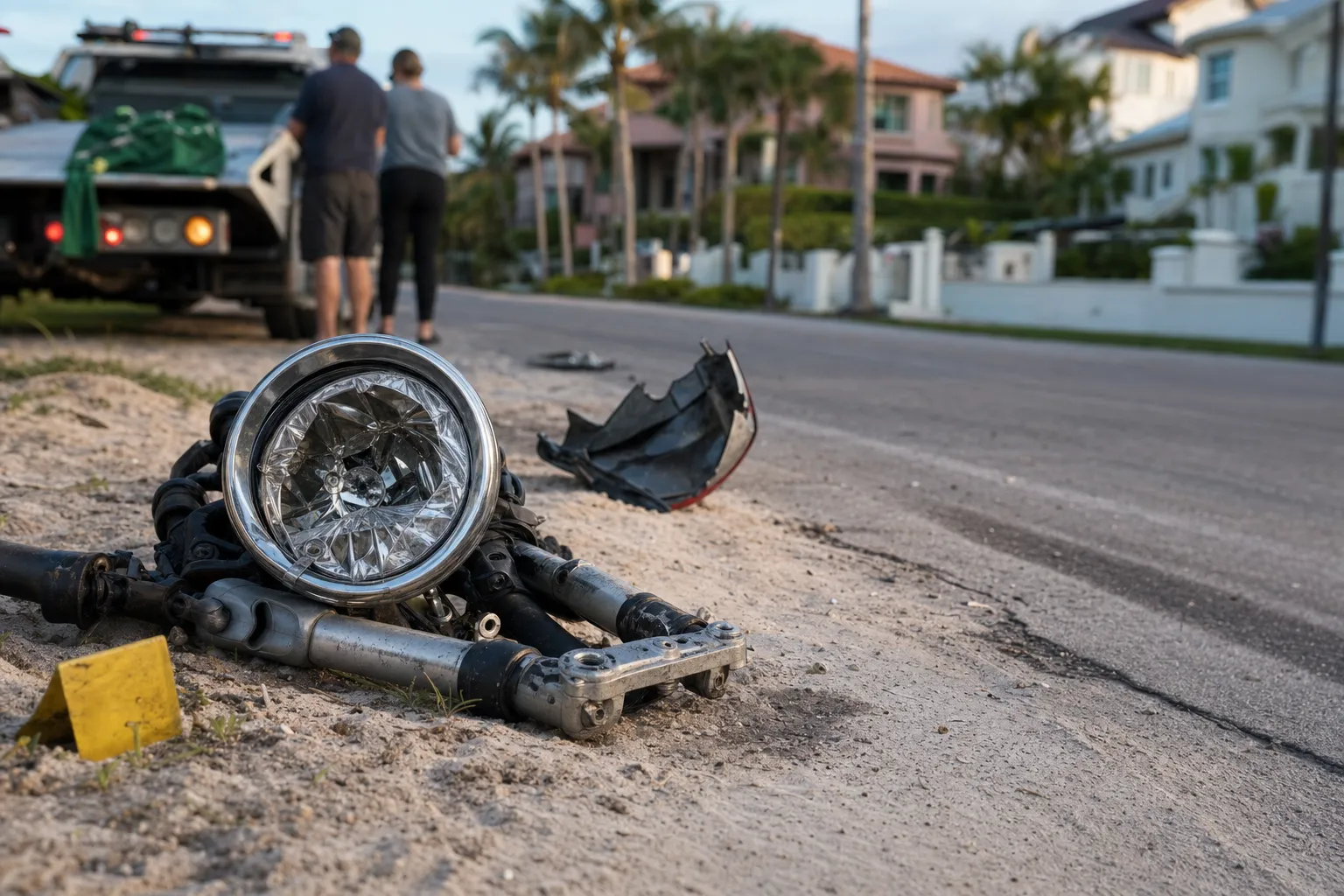
Accident reconstruction is a forensic analysis that recreates how a crash happened so parties can understand liability and damages. In Bee Ridge Florida, reconstruction often focuses on sight lines, roadway geometry, posted speeds, and any electronic data from vehicles. At Thomas J. Cherichello we evaluate reconstruction reports, coordinate with qualified reconstruction experts, and use findings to support personal injury and insurance claim disputes.
What is accident reconstruction
Accident reconstruction combines physical evidence, witness statements, vehicle data and engineering principles to recreate a collision. The process can estimate vehicle speeds, impact angles, braking, and the sequence of events before and after a crash. Results are used for liability analysis, expert testimony, and to quantify damages in a claim.
Why reconstruction matters in Bee Ridge Florida
Bee Ridge has a mix of residential streets, commercial corridors and arterial roads where visibility and speed differences affect how crashes occur. Reconstruction can answer local questions such as whether a driver had a clear line of sight at a specific intersection, whether skid marks match an offered explanation, or whether a vehicle safety system behaved as intended. That clarity matters to insurers, juries and judges.
When a crash is serious, reconstruction helps move a claim beyond opinion by tying conclusions to physical evidence and recognized methods.
Key concepts in accident reconstruction
- Scene documentation. Photographs, measurements and traffic control details preserve the scene for analysis.
- Physical evidence. Skid marks, curb damage and vehicle final rest positions provide measurable data.
- Event Data Recorders or EDRs. Many modern vehicles record pre crash speed, brake use and throttle position.
- Witness statements and medical records. Timing and injury patterns can confirm or challenge a mechanical reconstruction.
- Forensic experts. Engineers or certified reconstructionists apply physics and validated methods to interpret the data.
When reconstruction is likely to help your claim
- There is a dispute about who had the right of way.
- Reported speeds do not match the physical evidence.
- EDR data is available and relevant to injury causation.
- Roadway design features like sight obstructions or unusual geometry may have contributed.
- Liability affects the amount of damages at stake, for example in serious injury cases handled under our Personal Injury Claims practice.
Checklist for whether you should consider reconstruction
- Serious injuries or disputed fault.
- Multiple parties with conflicting accounts.
- Damage patterns that seem inconsistent with the reported collision.
- Vehicle EDR data exists or the scene was preserved with photographs.
How reconstruction is done step by step
- Document the scene. Capture photos, measurements, traffic controls and final vehicle positions.
- Collect vehicle data. Retrieve EDR data if available and preserve vehicle components for inspection.
- Analyze physical evidence. Measure skid marks, gouge marks and debris fields to estimate speeds and trajectories.
- Model the event. Use software and engineering calculations to test scenarios that match the evidence.
- Report and testimony. Produce a written reconstruction report and, if necessary, provide expert testimony in depositions or at trial.
Common misunderstandings
- Reconstruction gives probabilities not certainties. Experts present ranges and scenario likelihoods rather than absolute statements.
- Not every crash needs reconstruction. Minor damage or uncontested liability usually does not justify the cost of a full reconstruction.
- EDR data is not always present. Older vehicles and some models do not record the same parameters.
Pro tip: Preserve your evidence quickly. Take wide and detailed photos on your phone, note witness names, and avoid moving vehicles unless required for safety.
How we use reconstruction in insurance and personal injury work
Tom brings more than 30 years of insurance claim adjusting experience to every matter. That background helps us evaluate reconstruction findings from the perspective of how insurers think and value claims. We use reconstruction selectively to strengthen liability arguments, to challenge insurer positions, and to quantify damages when accident mechanics affect injury causation.
When reconstruction is appropriate we coordinate all aspects of the process including selecting qualified experts, integrating medical records, and presenting the findings in reports and testimony that support the claim file.
For collisions involving vehicles we often link reconstruction results to related work in Car Accident Claims and to evidence practices described under our Evidence Gathering topic page. For technical expert work we reference methods discussed on our Expert Witnesses topic page.
Related services and how they connect
- Personal injury representation. Reconstruction informs liability and damage claims handled through our Personal Injury Claims service.
- Car and motorcycle claims. Damage patterns and EDR data differ between cars and motorcycles, and we coordinate reconstruction appropriately for each vehicle type.
- Insurance claim disputes. A reconstruction report can be a key document when an insurer denies fault or undervalues damages.
Related locations and local factors
Bee Ridge is part of the greater Sarasota area. Road design, seasonal traffic, and local speed limits in Sarasota County influence how we assess a crash. For location specific guidance see our Sarasota page which explains regional practices and local court considerations.
Sarasota Florida is our home base and where we frequently work with local engineers and experts familiar with county roads, signal timing and intersection layouts.
Helpful resources and authoritative references
- National Highway Traffic Safety Administration pages on Event Data Recorders for background on vehicle telemetry.
- State and county traffic engineering publications for local roadway standards and posted speed information.
- Our detailed topic page on Accident Reconstruction for deeper discussion of technical methods and common expert qualifications.
Comparison of reconstruction options
| Quick field review | Full forensic reconstruction |
|---|---|
| Scene photos, basic measurements, used for early case assessment | Comprehensive data collection, EDR download, engineering modeling and expert report |
Key takeaway
Accident reconstruction is a technical tool that clarifies how a crash occurred. In Bee Ridge Florida it helps resolve disputes about speed, visibility and sequence of events. We apply reconstruction when the facts and stakes justify expert analysis and when the results will make a meaningful difference to a personal injury or insurance claim.
Frequently asked questions
How long does accident reconstruction take
Timelines vary with complexity. A basic field review can take days, while a full forensic reconstruction including EDR analysis and modeling can take weeks to months depending on evidence availability and expert schedules.
Will EDR data always be available
No. Availability depends on the vehicle make model and whether the system recorded the crash. Even when EDR data exists an expert must properly retrieve and interpret it.
Can a reconstruction change the outcome of my claim
Yes. Reconstruction can provide measurable support for speed estimates, braking patterns and point of impact, which we use to support liability and damages in negotiations or court.
How much does reconstruction cost
Costs depend on the scope and expertise required. We evaluate whether reconstruction is likely to change the outcome of a case before recommending expert work.
How do you choose a reconstruction expert
We look for engineers or certified reconstructionists with courtroom experience, relevant credentials, and a record of methods that follow accepted industry practice.
Learn more and check our local profile
To read client reviews, get directions, and see our public profile, check Thomas J. Cherichello on Google Business Profile. For related topics and deeper guidance visit our topics and services pages.